Dance-Movement Psychotherapy
All is movement
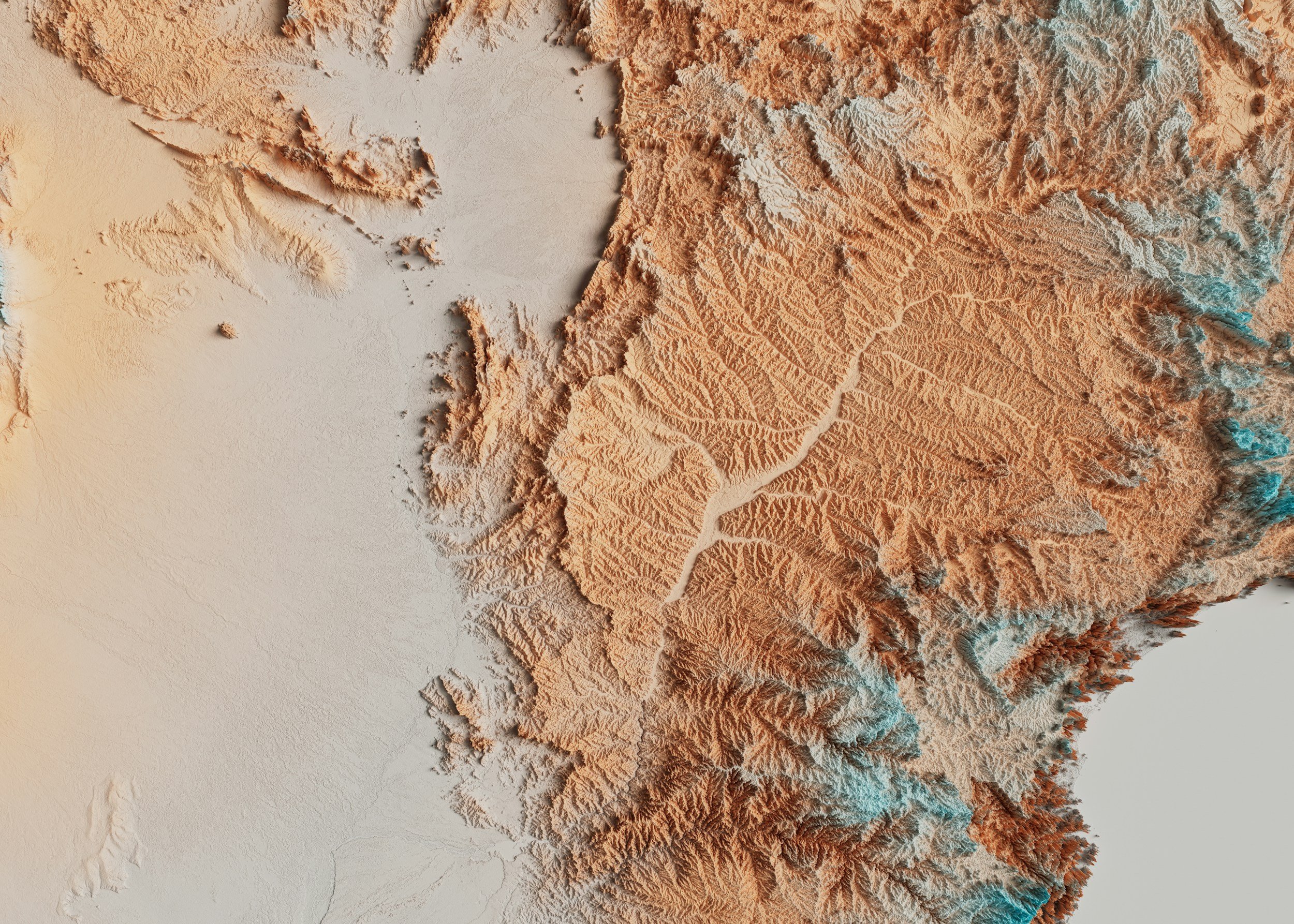
The Earth turns and its dance with the stars create days and nights, tides and seasons.
We dance daily with the force of gravity that keeps us standing on Earth and the subtle movement of plate tectonics.
Our body is also in constant motion:
The rhythm of our heartbeat. The constant coming and going of our breath.
Among many unconscious movements.
Life is movement. The millennial drive to come out of the water and inhabit the Earth.
The collective dance of atoms and cells.
Death is also part of the dance.
The movement of the decomposing body returning to the Earth.
We are part of this dance, this continuous movement.
What is Dance-Movement Psychotherapy?
Everything around us and inside us is in constant movement.
It is easy to forget in a system that has disconnected us from this organic movement that is life on Earth.
Dance-Movement Psychotherapy (DMP) is part of this movement.
It is an Embodied Therapy: a form of therapy that involves the body in movement.
Embodiment meaning: to integrate into one’s body, to be in one’s body, to materialize.
Moving bodies are at the heart of DMP.
What are the fundamental principles of Dance-Movement Psychotherapy?
Body and mind are intertwined and inseparable
What happens in the body impacts what happens in the mind and vice versa.
Cartesian discourse has separated our mind from our body. This separation creates a hierarchy: The mind and spirit being above the body and emotions that must be dominated, controlled and owned. DMP supports the process of embodiment in order to reconcile body and mind. To finally get out of the illusion of this separation which is not only an individual experience but also collective and systemic one.
Non-verbal language is as important as verbal language
Sometimes words are not enough, so we open a space of expression through the body, rhythm, sounds, breath and movement… Where emotions and energy can flow freely, be expressed and transformed.
DMP makes therapy accessible beyond words in a system where verbal language dominates allowing for other modes of communication and expression to be explored.
DMP is in the present moment
DMP invites to connect in the here and now, in the present.
To avoid getting stuck in the head and slowly coming into the body, to fully inhabit one’s whole body.
In a society that emphasizes dissociation, returning to one’s body can be complicated or even painful. It is a survival skill to leave one’s body when the pain is too much, when staying in the present is too unbearable. And it is totally ok. But our system, which has demonized our bodies and our emotions, pushes us even more to numb, intellectualize, and denigrate our own bodies.
It is in this context that DMP supports the process of embodiment, of returning to one’s body. While respecting one’s own rhythm and consent, one can gently re-inhabit their body, and feel their emotions and sensations. And, step by step, gently taking root in their body and on Earth.
DMP dances with what emerges in the present moment. This may be memories of the past that continue to haunt the present, possible futures etc. In any case, it is what is there in the moment and it is from this starting point that the dance unfolds.
DMP is a practice that considers the person in their entirety and integrity
DMP is a therapy centered around the body, so it is essential to take into account the body in its complexity and its interconnections with other bodies.
Organic Bodies
Our body is a living archive that records our life experiences and keeps our conscious and unconscious memories.
Set in motion, memories emerge and dance.
DMP invites us to dance with these memories. Our body becoming a welcoming land, a refuge for our banished, rejected, buried and forgotten parts.
We explore our relationship with the body: how to be embedded?
Our bodies are magical. They are spaces of encounters, intersections and journeys.
We are made to believe in a fixed and individual identity, but our organic body is already a creative space of encounters and sharing:
a melting pot of cells, organs, and bacteria dancing together. A body that is more non-human than it is human.
Like the Earth, the blue planet, we are aquatic, more fluid than solid. The spirals of our skeleton are like the sinuous curves of tree branches.
Setting bodies in motion allows us to reconnect with this organic reality of the body, to feel it and gently reintegrate it.
The organic body is not essentialist. It is not a question of defining a fixed, binary, and gendered nature of bodies. The intention is to bring the body back into its organic reality, which is alive, more than human and connected to the Earth.
Interconnected Bodies
Our Bodies are open doors to the outside. Constantly in connection with our environment, our body expands and dances intertwining with other bodies, human and non-human.
The process of embodiment, of rooting in one’s body unfolds and our roots intersect with others. Through movement, we explore how we dance with our ecosystem: the people, animals, plants that surround us. As well as the land on which our feet dance carrying its own history, culture, rhythm and landscapes.
We dance our relational systems. The movement extends beyond the nuclear family to include the chosen family. Our family tree does not stop at the biological and human transgenerational. Its roots intermingle with the mycelium and connect us to our queer, plant, animal and aquatic ancestors.
Our motion moves the ecosystem and conversely, a movement in the ecosystem makes us dance: the impact is mutual.
It is a relational dance that reminds us of our interdependence.
Political Bodies
Our bodies are not neutral, they are part of a social body. It is therefore essential to take into account the socio-political system and the impact the systemic oppressions have on our bodies. This feminist approach to the body and therapy allows us to consider the impact of oppression on physical and mental health and to remind ourselves that responsibility is not individual but collective.
We are therefore exploring the politics of bodies concerning: gender and sexuality, race, class, ableism, health, age, religion, neurodiversity... And the discrimination based on where one is situated in the social landscape. Through this dance of political bodies, we can question the normalized body and deconditioned the performances (of gender, class, race...) that are imposed on us.
With this approach of DMP, we dance with the system and the non-neutrality of bodies:
How are our experiences conditioned by the system and the stories that define our bodies? How can our bodies also be spaces of resistance, empowerment and deconditioning?
Our organic, interconnected and political bodies are like the three strands of a braid. These three aspects of our lived experience are interconnected, horizontal and inseparable. It is our Corporealities: our multiple realities, lived and embodied.
Ressources
This feminist perspective of the body is based on the integrative approach of DMP by Beatrice Allegranti who has developed three aspects of our embodied experience: the autobiographical body, the relational body and the political body.
This integrative approach is also based on the intersectional feminism theorized by the African-American lawyer Kimberlé Crenshaw. Revealing the intersection of oppressions of race, gender and social class criticizing and questioning a white and bourgeois feminism.
Also nourished by Ecofeminism: a movement that intertwines feminist and ecological struggles: the oppression suffered both by sexual minorities bodies and the body of the Earth and its inhabitants.
And also, by Ecospirituality, an ecological approach to spirituality bringing it back to Earth and into the bodies: for an embodied spirituality. Inspired, among others, by Starhawk.
Who is DMP for?
Every.bodies are welcome !
No experience in dance or movement practice is required. Dance-Movement Psychotherapy adapts to each person’s mobility.
Join the dance!
DMP sessions are done individually or in a group.
The individual DMP sessions are done via video call and last 1 hour.
The rate is 60€ (possibility to have a solidarity rate at 50€ or a support rate at 70€)
Possibility to occasionally meet outside or in a dance studio (to discuss together)
Possibility of a free 20-minute video to meet and connect.
To contact me you can:
Send an email to ecodanse@gmail.com
Call or send a message to 06.83.79.42.12
Looking forward to meeting you and dancing together!
Roots of DMP
DMP developed in parallel with the Arts Therapies that emerged in the 19th and 20th century. After the Second World War, a dialogue is born between modern dance and psychology. The influence is mutual, the relation to the body and care evolves and questions the connection between mind and body. The first sessions exploring the intertwining of art, dance and psychotherapy began in the US and Europe.
The history of dance as a form of therapy is not exclusively from Western cultures and its roots are much older and, like the rhizome, extend all over the Earth. The act of coming and dancing together healing through rhythm, voice, movement and rituals has existed since the dawn of time and across the world. Each culture has a specific approach with its own rituals and cosmology that it is important to respect.
In Europe there are forgotten roots of ecstatic and collective dances that healed and transformed. Like, for example, the Dionysiac dances, the Tarantella in Italy and the Carnivals, Processions and Village Festivals with their own culture, history and movements that vary depending on each region.
Each dance is deeply intertwined with a land and a folklore (folk: people and lore: wisdom, folklore: the wisdom of the people). And tells a story with its own vocabulary of movements, rhythms, and songs. It is also an integral part of the history of dance therapy.
DMP is in constant motion. Scientific and experiential advances enrich DMP theories and practice. DMP continues to develop in order to still be relevant in the current context; to adapt to individual and collective needs and to challenge a system that denigrates bodies.
DMP is for everyone and makes therapy accessible beyond verbal and mental languages. As everything happens in the body: traumas, grief, birth and even the end of life so DMP can support any life event.
To learn more : The Association Française de Danse-Mouvement Thérapie, the European Association of DMT, the ADMP UK, the American Dance Therapy Association.
My approach to DMP
My approach to DMP is eclectic and feeds on my lived and danced experiences.
Feminist : I was trained with a feminist approach that I continue to develop and refine taking into account the intersection of oppressions. This practice of deconditioning is a constant movement, which keeps questioning itself. In the sessions, we can explore the body politics: where we are located in the social landscape, how it impacts our experience and our relationship with the body, and how we dance with the system.
Individual experience is therefore considered within its systemic interweaving.
How, for example, traumas can be experienced individually, and also within transgenerational lineages and collectively in society. And how oppressive systems can be responsible for and complicit in these traumas.
My approach to feminist DMP is based on the non-neutrality of bodies and brings a systemic lens into the therapeutic process. Thus allowing a process of embodiment taking into account the corpo.realities of each person for an empowerment and liberation of all bodies.
Queer : DMP reconciles the binary separation of body and mind. It therefore embodies a form of fluidity and non-binarity (in the broad sense of the term). DMP can support the journey of coming in & out (no matter the age, late bloomers are welcome). DMP is a space to break out of gender norms and sexual orientations, to explore one’s queer body, in its connection to oneself, others, and the world.
To dance beyond norms and with the letters LGBTQIA+ knowing that the + reminds us of the constant movement of our identities, and the fluidity of our bodies.
I practice an affirmative DMP that supports and validates the identity of each person.
Ecospiritual : Spirituality can also separate body and mind. The intention is to bring spirituality back into the body, to reconcile them. For an embodied spirituality that takes into account bodies and the political system in which they belong.
I respect everyone’s spiritual practices and culture and integrate spiritual questions into the therapy.
In this context, DMP can be experienced as a space of exploration, openness and connection. To dance with the Earth, the seasons, the cycles, death, human and more-than-human ancestors.
There is also the possibility of co-creating tailor-made rituals according to each person’s needs. Rituals that mark our changes of skin, life, and season.
Dreams and symbols : The language of dreams and symbols is my third language (with English and French). I am passionate about these doors to imagination, which allow to change history, rewrite it, create other possibilities and dream outside the norms. The field of dreams and imagination has also been denigrated by Cartesian rationality. There is a strong gap between the real and the imaginary, putting what is considered as real in the foreground and relaying the unconscious and dreams in the background.
Yet dreams, in many cultures and throughout time, have a central place in community, decision-making, and care practices.
In my practice of DMP, which is part of artistic and creative therapies, dreams and imagination are welcome in the therapeutic process. The intention is to co-create a connection with one’s dreams, to dialogue with the unconscious, to expand one’s imagination and to embody one’s dreams.
Storytelling : Even though DMP starts from the body in motion, the stories that condition our bodies and relationships are also important. Who tells the story? Which narratives dominate? The voices of oppressors are overpowering. How to hear other voices? Those that flow below the surface like an underground source. And not only with words but with our bodies in motion we can unearth the buried stories and rewrite them.
Through DMP, we can also explore folklore and tales from a queer, ecological and deconditioned point of view. To reconnect with oral transmission, revisit and embody these stories.
Costumes : Having a costume training, it is possible to co-create costumes and masks made from recycled materials (ecological and economic). To give birth to hybrid beings, half-human, half-animal and vegetal: trance-species. To reverse roles, play with social performances and transgress norms (of gender, class...) as in carnivals.
To embody different parts of us, play, be surprised, to discover and meet ourself.
Body and movement are the main mediums of DMP. I also open the door to other artistic forms such as drawing, collage, writing, sewing etc.
These different approaches to DMP allow me to adapt to the needs of each person, to be able to listen and meet each person where they are.
DMP is a practice in perpetual motion, never frozen, I remain curious about what emerges when the body starts to move.
The therapeutic relationship is co-created within this movement inviting to return to the body: giving the body space to express itself and from there, explore our way of being in the world.